Dental services open at People’s, serving uninsured patients

On June 19th, People’s celebrated the opening of its dental services. Thanks to the generous donation of a fully-equipped van by St. David’s Foundation, People’s was able to add “dental care” to its long list of services for the medically under-resourced and uninsured. Whether a patient needs cleanings, x-rays, fillings, prosthetics or root canal, our team is ready to serve.

The dental team is led by our new Director of Dental Services Dr. Carlos Diaz, DDS, RGDT. Dr. Diaz comes to us with over 15 years’ experience working at dental clinics and community health centers in Texas, New York, and El Salvador. He is a graduate of the University of Texas at San Antonio’s International Dentist Program and recently relocated to Austin. He is joined by Nancy Lozoria, Dental Services Manager, and Dental Assistants, Gretchen Green and Dulce Sanchez. Together they work to put patients at ease and strive to see them leave their appointment smiling and happy.

The program officially opened its doors on May 15th and, in only a month, has already treated 50 patients. Currently the program is serving uninsured adults with chronic disease (e.g. diabetes, high blood pressure, obesity, depression, and anxiety).

National Professional Social Worker Month: Robin Rosell

Did you know? Medical care accounts for only 10% of an individual’s overall health, while behavioral health—factors like social integration, support systems, and stress— determines 30% of overall well-being. That 30% is where Robin Rosell, People’s Director of Behavioral Health and Social Services, has focused her 23 years at the clinic. “Being open to change and improvement” is key to medical social work, Robin said. “The field is always evolving, and the pendulum always swings back and forth between different schools of thought.”

With her holistic approach, Robin has initiated several effective programs that have helped improve patients’ lives. The first was TANDEM, the teen prenatal parenting program that is currently in its 22nd year. It provides intensive case management to support teen mothers’ social, medical, and emotional wellbeing needs. Since 1998, TANDEM has served one thousand mothers, and helped reduce their chances of having a second teen birth to less than 3%, compared to the state average of 20%. Robin led the creation of our Integrative Behavioral Health Department, which provides patients with convenient in-clinic emotional wellbeing services. Finally, Robin also helped launch our Pain Management Program to reduce opioid use and treat patients with complex chronic pain.

The mind-body connection is undeniable, Robin says. For instance, we know that depression and diabetes are closely linked and that stress plays a role in physical pain. When we see the whole patient—not just their symptoms—we can help them get healthy and stay healthy for life. Thank you, Robin, for your leadership and for growing a vibrant IBH department!

#NationalProfessionalSocialWorkersMonth #IntegrativeBehavioralHealth #SocialWorkers #SocialDeterminantsOfHealth #PeoplesofPeople

National Professional Social Worker Month: Ana Serratos

March is National Professional Social Work Month! To honor our #SocialWorkers and to help shed light on their important work, we’re bringing you their stories each week. #LMSW #PeopleofPeoples #BehavioralHealth

Our first feature is on Ana Serratos, a Licensed Master of Social Work (LMSW) in the Integrative Behavioral Health department at People’s Community Clinic. Ana, like our 10 other social workers, counsels patients who are experiencing symptoms of depression, anxiety, PTSD, grief, and distress. Ana also provides support to the Pain Management Program, a multidisciplinary approach to reducing opioid use and treating patients with complex chronic pain.

In fact, counseling is one of the many non-pharmaceutical options recommended by the Center for Disease Control for alleviating pain. Patients will talk with Ana about their chronic pain issues—which are often unexplained and difficult to treat—and say things like, “I feel like you’re really listening to me,” or “I feel like you understand me.” (Ana says it’s moments like these that make her job as a social worker awesome!)

Ana also coordinates other “wrap-around” services like acupuncture, nutrition counseling, exercise, and medical-legal intervention to help patients with their symptoms.

Thank you, Ana, and thanks to the team of social workers that provide such great care for People’s patients!


How our Medical-Legal Partnership helped one family fight for fair housing

Eva had one too many scares. For months, she and her 6 kids suffered from chronic respiratory issues. Her youngest, two-year-old Ana Maria, was in the worst shape. After rushing Ana Maria to the emergency room for the third time, Eva came to People’s looking for relief. They met with multiple pediatric specialists, each who looked for the root cause of the family’s illness.

It became clear that an unsafe living condition, particularly mold, was endangering the family’s health. For help, the physicians called on Keegan Warren, JD, an attorney at the Austin Medical-Legal Partnership (AMLP).

The AMLP recognizes that good health depends on many factors outside of the exam room. Social and legal determinants of health – like housing and work conditions, or hurdles to receiving certain benefits – effect health in tremendous ways, sometimes even more than the clinical care they receive. Often, a legal intervention is needed to address these health-harming situations. As part of the AMLP, attorneys are housed at People’s, and patients are referred to attorneys if they need legal help to improve their health.

Keegan learned that rains from Hurricane Harvey had flooded the family’s apartment, but property managers had not addressed the resulting mold infestation. Mold in the walls, floor, and furniture had contributed to debilitating – and dangerous – respiratory problems.

With Keegan’s help, the family took the apartment owners to court, which forced them to address the substandard conditions. Eva was assured that with the Keegan’s protection, the apartment owners would not evict the family or take any other retaliatory actions. As a result, the family was able to move to a new, clean apartment. The children’s health issues resolved slowly, and Eva’s family began the process of healing – this time, in a home with fresh air.


Community Partnerships

Walk into to People’s Community Clinic at 6pm on a Tuesday and you may be surprised by what you find. Medical appointments are over for the day, but the building is still buzzing with activity.

In the Community Room patients, neighbors, and clinic staff dance to upbeat Latin hits—it’s the weekly free Zumba class. The bass is pumping as students groove from side to side. They are laughing and moving to the beat. Zumba class is so much fun you may forget that you’re getting in a serious work out!

People’s is so much more than a clinic. We are a holistic health home for our patients

Down the hall in the Teaching Kitchen home chefs gather for La Cocina Alegre/The Happy Kitchen, a program offering free healthy cooking classes for People’s patients. Taught by People’s trained Health Educators, classes are available in English or Spanish (tonight’s class is in Spanish), with sessions for adults and teens.

Students receive a healthy cookbook and groceries to practice preparing the new recipes at home. The clinic even offers complimentary child care so busy parents can enjoy the class.

Zumba and La Cocina Alegre are just a few of the health and wellness programs that the clinic offers in partnership with other community groups. These partnerships bring enriching programs that empower patients to take charge of their health.

We offer a full calendar of classes, resources, and specialty services, everything from free summer meals for kids to breastfeeding support groups and healthy parenting classes.

Programs like ours make People’s so much more than a clinic. We are a holistic medical home for our patients and a health and wellness hub for our community. Stop by some time and see for yourself—even better, join us for a class!


Current Offerings

Classes, workshops, and resources empower patients to get and stay healthy.

DIAPER BANK

Free diapers for patients, provided by Austin Diaper Bank.

SNAP (FOOD STAMPS)

Patients can apply for and renew SNAP, or check the status of their application on-site at the clinic.

SUMMER MEALS

Many kids who qualify for free or reduced lunches during the school year struggle to access meals during summer. Thanks to a partnership with Central Texas Food Bank, we offer free lunch all summer long, four days a week.

MEDICAL-LEGAL PARTNERSHIP

Our staff attorneys provide free legal counsel for patients facing health-harming legal needs. In Partnership with Texas Legal Services Center.

BREASTFEEDING SUPPORT

New and expecting mothers learn about the benefits of nursing. Students work with People’s Lactation Consultant to develop a breastfeeding plan, setting themselves (and baby!) up for success.

REAL TALK

Learn how to help your teen make healthy decisions through better communication. Connect with other parents, gain skills to talk to your teen about intercourse. In partnership with St. David’s Foundation and Lifeworks.

NURTURING PARENTING

A family-centered, distress-informed class designed to build nurturing parenting skills and empower families against cycles of abuse and neglect. In partnership with Any Baby Can.

THE HAPPY KITCHEN/La Cocina Alegre

Learn how to cook healthy meals for you and your family with this 6-week cooking and nutrition program. In partnership with Sustainable Food Center.

SMALL BITES

Teaching students ages 6-10 about nutrition and healthy cooking. Healthy snacks every class! In partnership with Common Threads.

MOM’S CLUB

A supportive group for moms with children ages 0-5 to connect, learn new skills for child development, find resources, and make new friends.

ZUMBA
Fun, energetic, group exercise class. Meets every week – all fitness levels welcome! In partnership with It’s Time Texas.

The Case for Oral Hygiene

This toothbrush has orbited the moon.

Astronaut Michael Collins brought it aboard Apollo 11 in 1969 in his Personal Preference Kit, a small bag of personal items each astronaut was allowed to carry on the lunar mission. Perhaps even more impressive is the impact this plastic device has made right here on Earth. While chewing sticks appeared thousands of years ago as a form of oral hygiene, the modern bristled toothbrush we recognize today wasn’t manufactured in the United States until the late 1930’s when DuPont de Nemours debuted a model with nylon bristles. (Previous versions were made with boar hairs found on a hog’s neck.)

Even with advances in toothbrush technology, brushing didn’t became popular in the United States until after World War II when returning soldiers brought the good habit back with them.  Routine tooth brushing has helped reduce the prevalence of periodontal disease, also known as gum disease, in adults since the early 1970’s. However, despite the incorporation of tooth brushing into our everyday lives, periodontal disease is common in American adults aged 30 and older.

A recent study by the Centers for Disease Control and Prevention found that nearly half (47.2 percent) of this population have some form of periodontal disease. The prevalence of periodontal disease increases with age—over 70 percent of adults aged 65 and older have it. And disparities do exist. Men are more likely than women to have gum disease, as well as current smokers, and those with lower financial standing and education levels.

Perhaps you are thinking if periodontal disease is so common what’s the big deal about it? Well, it’s a bacterial infection of the mouth tissue caused when a sticky plaque builds up around the teeth. In its early stage gingivitis, your gums may bleed and become swollen and red. Ever floss and notice some blood on the string? That’s an early indicator. Once the infection becomes more serious, a stage called periodontitis, your gums can actually pull away from teeth, creating pockets where bacteria can gather. Eventually, your teeth may loosen or even fall out. But that isn’t the only reason to brush and floss every day.

Around the time Collins donated his toothbrush to the National Air and Space Museum in 1984, medical studies revealed periodontal disease is associated with cardiovascular disease. It appears Collins had his priorities in order when he piloted the trip to the moon. Some studies have shown a 19 percent increase in the risk of future cardiovascular disease. While a clear link remains to be identified between heart disease and periodontal disease, scientists believe the connection may involve the role inflammation plays in both diseases.

In August, the American Journal of Preventative Medicine published a study showing that patients suffering from periodontal disease, as well as chronic conditions such as diabetes, that received frequent follow up dental treatments, accrued lower medical costs and required fewer hospitalizations afterward. In other words, it paid to take care of their gums.

The researchers write that treatment of periodontal disease involves cleaning above and below the gum line. While routine dental visits are important, a healthy habit of brushing and flossing, and microbial mouth rinse are helpful, too. The bottom line is invest in a good toothbrush. Use it often and correctly. It may not take you to the moon, but it will let you keep your smile for life. Unlike George Washington, who spent much of his adult life afflicted with inflamed gums and wearing ill-fitting dentures.

-KM

Photo credit: Eric Long, National Air and Space Museum, Smithsonian Institution

Sources:

Vettore, M. V. (2004). Periodontal disease and cardiovascular disease. Evidence-based dentistry, 5(3), 69-69.

Dave, S., & Van Dyke, T. E. (2008). The link between periodontal disease and cardiovascular disease is probably inflammation. Oral diseases, 14(2), 95-101.

Jeffcoat, M. K., Jeffcoat, R. L., Gladowski, P. A., Bramson, J. B., & Blum, J. J. (2014). Impact of Periodontal Therapy on General Health: Evidence from Insurance Data for Five Systemic Conditions. American journal of preventive medicine, 47(2), 166-174.

A Place to Call Home

Everyone seems to know the creation story: People’s Community Clinic began in the basement of the Congregational Church of Austin in 1970. It was a humble operation. A few evenings each week, a volunteer staff of physicians and health providers delivered free healthcare to patients who otherwise couldn’t afford it. Patients wrapped around the side of the church waiting to be seen, and volunteer doctors and staff stood on the sidewalk shaking coffee cans for donations to keep the clinic afloat. This is not that story. This is the story of Reverend John Chesley Towery—the man who gave PCC its first home.

His story begins in Corydon, Kentucky five decades earlier. Towery was born March 25, 1926—the older of two sons who would one day become ministers. After graduating valedictorian of his high school class in 1943, Towery attended the University of North Carolina and joined its V12 Naval Reserve Officers Training Corp, an accelerated program designed to produce naval officers for the war effort. He was commissioned at graduation in 1946, and afterward served as an ensign on the USS Nantahala, a tanker that replenished fuel for ships in the Pacific theater.
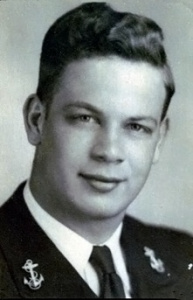

One might think of the Nantahala as a service ship that played a support role as it delivered the fuel and cargo others needed to do their jobs. Crew members worked tirelessly as they traveled throughout Japan, the Philippines, the Malay Peninsula, and along the coast of China refueling ships. Although the war had ended during Towery’s service, the devastation from it had not. Viewing the damage likely influenced his career path, wrote longtime friend Mel Oakes.

Upon returning stateside he used the GI Bill to attend Yale Divinity School where he received his Masters of Divinity. He was ordained in 1950 and accepted a position as minister of the Mount Holly Christian Chapel in Amelia, Ohio where he met and married Eleanor Ruth Morgan that same year.
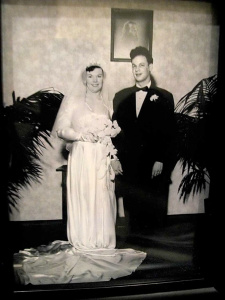
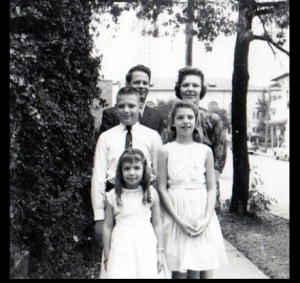
Together they served in churches in Ohio, Idaho, and Wyoming before a position opened at the Congregational Church of Austin in 1959. It would be Towerys final move and where their three children Joseph Chesley ‘Ches’, Sally, and Mary were raised. It was also where Reverend Towery pressed for his congregation and community to build a culture of involvement—regardless of the color of one’s skin, their sexual identification, politics, or poverty. For Oakes and his wife Pat, that message of welcoming others is what drew them into the Congregational Church in 1964. The Oakes moved to Austin from Tallahassee where they had stopped attending church in Florida due to unfair division. A visit to the Congregational Church of Austin proved different.

Reverend Towery worked to upend policies of division in Austin. He demonstrated against separation in movie theaters in Austin. He drove to Huston-Tillotson University each week to invite students and faculty to attend church services—actions that would later prompt the university to award him with an honorary doctorate for his involvement in the civil rights movement.

“John had a special affinity for those people who were closed out of society,” Oakes said during a recent memorial service for the reverend. “John opened the church’s doors to troubled youth and invited them inside to be cared for in a ministry called The Raft. And through his personal involvement in the civil rights movement, his personal commitment to bring the people of Austin together, John helped open up the doors that were closed to people because of the color of their skin.”

As a child, Mary Towery, now Mary Masters, didn’t realize the impact her parents had on their church and their community. Part of it is because Reverend Towery was her father, and partly because he and her mother lived what they preached. Her dad had the ability to challenge social stances without being confrontational; he had a soft touch that was effective when dealing with hard issues. And they operated as a team. Just as her father helped push through programs in the church like the Raft, it was because he had his wife’s support and energy to do it, Masters said.

Her parents approached the world with open arms and hearts. They impressed upon their children the importance of fairness and openness, she said. “It wasn’t just something they preached form the pulpit on Sunday. They lived it.”
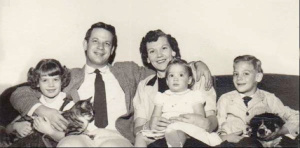
The Towerys applied the same open door policy to their home as well as the church. Occasionally the family took in people who needed one. Part of this is likely the influence of her mother, a foster child herself, Masters said. Sometimes for the Towery children this meant sharing rooms as well as a home.

“I don’t remember it being hard because it was always filled with love,” Masters said.

After starting the Raft program, which provided shelter to homeless teens who needed it, Reverend Towery offered did the same for those who needed healthcare. He saw that people in the community were in need and offered the basement of the church to the People’s Free Clinic who were working to address it.

“He was the type of minister who felt that the church should not just be used on Sunday,” Masters said. “My father fought very hard for [the clinic] and wanted it to be a success. He never dreamed that it would outgrow the church, or outgrow the clinic where you are now.”
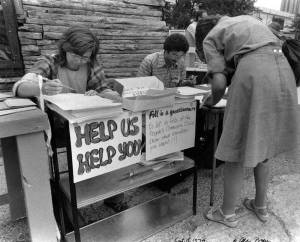
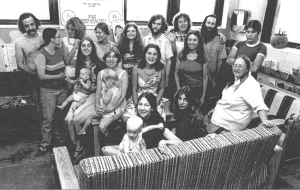
Growing up, Masters often helped clean rooms in the church for potluck events and would open the refrigerator to find it stocked with medications and syringes as well as leftovers. Sunday school rooms were flanked by examining tables stashed behind curtains.

“It was all so fascinating to me,” she said. “It was the real world and as Christian it made you realize that this is what it’s supposed to be about.”

Alicia M. Jarry, one of PCC’s earliest volunteer providers, recalls how Reverend Towery’s invitation to house the clinic in its basement allowed thousands of people, including pregnant women and homeless individuals, access to care.

“I remember so clearly his involvement in expanding our services and allowing us to use the upstairs sitting area to have counselors give health information and advice to those who could not receive it elsewhere,” she said. “He was part of the health care team that included many doctors and nurses who worked as volunteers or for low wages to serve this population.”

And his impact on PCC continues today. One impressionable 8-year-old never forgot the lessons she learned in the Towery household. Robin Rosell, PCC’s director of social services, was childhood best friends with Mary (Towery) Masters. Reverend Towery used to drive the girls to middle school events and later to high school football games. He was a master gardener and had a plot in one of the city’s community gardens. He routinely sent friends and neighbors home with fresh produce.

“He planted literal seeds and so many other seeds that are continuing today,” Rosell said.

Towery was the type of person who didn’t assume a locked gate meant no entry, he just looked for another way over. And when he spoke, Rosell listened.

“I heard him tell the stories of the very beginning [of People’s Community Clinic],” she says from her office on the clinic’s second floor overlooking I-35. “He always talked about People’s. He was very proud of what had started there … He was a bit of a Renaissance man. I think growing up watching somebody who put his beliefs into action and did so much good in the community, it was inspiring. I thought that is the type of person I’d like to be.”
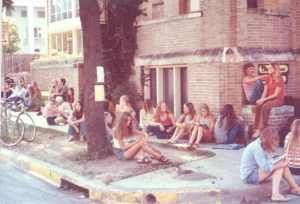
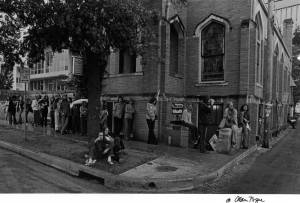
She remembers the lines of people waiting to be seen at the clinic, when Lucinda Williams still played on the drag. In PCC’s early days there was no air conditioning, there weren’t even exam tables available. Over time, the clinic acquired an air conditioning unit and eventually grew so large it had to move out of the church basement. Rosell grew up too.

She studied special education teaching and later social work as a graduate student at UT Austin. If she had a hard day she headed for the Towerys. And she never went to the front door. She knew the couple would be sitting in the back of the house and head straight for it.

Nearly 19 years ago Rosell saw a job posting in the newspaper seeking a social worker at a “fast-paced community clinic.” There was no name listed for the clinic. She applied anyway. When Rosell was called for an interview she learned it was at PCC. After being offered the job she picked up the phone.

“The Towerys were the first people I called,” Rosell said smiling. “It kind of felt like I had grown up.”

Reverend Towery led the Congregational Church for 30 years. He died November 28, 2014. Eleanor passed away March 3, 2014. They were married 63 years. A celebration of Reverend Towery’s life will be held January 18 at 11 a.m. at the Congregational Church of Austin located at 408 West 23rd Street.

-KM